
Does Original Medicare cover prescription drugs?
Very little. Original Medicare covers almost no drugs you pick up at a pharmacy. You add drug coverage separately, and waiting adds a penalty that never goes away.
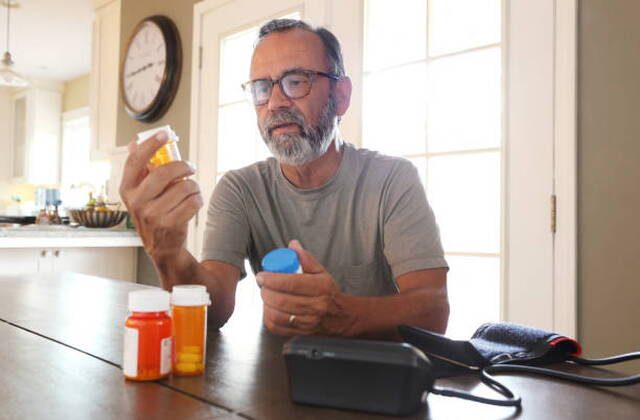
- Original Medicare pays for almost none of the drugs you pick up at a pharmacy, so drug coverage is a separate piece you add yourself.
- You can add it two ways: a drug plan you buy on its own next to Original Medicare, or a Medicare Advantage plan that has drug coverage built in.
- Every month you go without drug coverage adds about 1 percent to a penalty that stays on your bill for as long as you have the coverage.
Original Medicare, the Part A and Part B coverage you get from the government, pays for almost nothing you pick up at a pharmacy. Drug coverage is a separate piece you add yourself, and going without it brings a penalty that never goes away.
The drugs Part A and Part B do cover
Part A is the part of Medicare that pays for hospital stays. Part B is the part that pays for doctor visits and outpatient care, which is care you get without being admitted. Between them, they cover only a short list of drugs.
- Drugs given to you while you are admitted to the hospital, under Part A
- Drugs a clinic gives you that you could not give yourself, under Part B, such as infusions and most chemotherapy
- Some anti rejection drugs (immunosuppressants) after a covered transplant, and certain injectables, under Part B
Everything you fill at the pharmacy falls outside it. Medicare explains how to add drug coverage on medicare.gov.
Two ways to get drug coverage
- A standalone Part D plan. Part D is the part of Medicare that covers prescriptions, and standalone means a plan you buy on its own. You add it next to Original Medicare.
- A Medicare Advantage plan with drug coverage built in, which most of them have. An Advantage plan is a private plan that takes the place of Original Medicare. See how drug coverage works inside an Advantage plan.
If you join a standalone Part D plan while you are in an Advantage plan that already has drug coverage, the Advantage plan will usually drop you. See what Part D is.
Each drug plan has its own formulary, the list of drugs it covers, sorted into tiers, the price levels that set your share of the cost. Two plans with the same premium, the amount you pay each month for the coverage, can price your prescription very differently. See what a formulary usually leaves out.
The plan with the lowest premium is almost never the plan that costs you the least. What matters is what your own drugs cost on that plan's list, at the pharmacy you use.
The late enrollment penalty for going without
The late enrollment penalty is an extra charge for every month you go without creditable drug coverage, which means coverage at least as good as Part D. It is about 1 percent of a national base premium for each month. It stays on your bill for as long as you have Part D.
Go two years without coverage and the penalty is about 24 percent of that base premium, added to your bill every month. Medicare shows how the charge is worked out on medicare.gov.
If you take no medications
The penalty grows whether or not you ever fill a prescription. A low cost plan now almost always costs less than the penalty later. See how the penalty works.
The annual out of pocket cap on drug costs
Part D now has a yearly limit on what you pay out of pocket for covered drugs. Out of pocket means the money that comes from you, not from the plan. Once you reach the limit, your covered prescriptions cost you nothing for the rest of the year.
This limit replaced the old coverage gap that most people called the donut hole. If you take expensive drugs, a decision you made under the old rules is worth a second look.
Coverage that counts instead of Part D
You are not penalized for months when you had coverage at least as good as Part D. That includes:
- VA prescription benefits
- TRICARE
- Most employer and union drug plans, which must send you a creditable coverage notice each year
- Some retiree drug plans
Keep those yearly notices. They are your proof if a penalty is added by mistake.
If you are new to Medicare, decide on drug coverage when you sign up, not later. Write down your prescriptions and the pharmacy you use, then compare plans on your own drugs rather than on the premium. If you would like help with that list, call the office or enter your ZIP code in the form on this page.
Common follow-up questions
Does Part B cover any prescriptions?
Only a narrow set, mostly drugs given in a clinic, like infusions and injections you cannot give yourself. Pharmacy prescriptions are not covered.
Can I add Part D later when I need it?
You can, but only during an enrollment window. The penalty grows for every month you went without and is added to your premium once you join.
I get my medications from the VA. Do I need Part D?
VA coverage counts as creditable, so no penalty builds up. Some people still add Part D so they can use a regular pharmacy.
Want this looked at properly?
We are an independent agency in McAllen serving Hidalgo, Cameron and Starr counties. There is no obligation to talk it through.
Call (956) 687 3334Read next
Medicare Annual Enrollment in South Texas: dates and rules
Medicare

Gerino Alejos
Licensed insurance agent · License 3128710 · NPN 18243381
Owner of McAllen Insurance Group, an independent agency on North 10th Street in McAllen. Works with clients across Hidalgo, Cameron and Starr counties on Medicare, Marketplace health, life and auto coverage. Se habla español.