
Do I need commercial auto insurance?
How to tell whether your truck belongs on a personal or a commercial policy, and what happens to a claim when you guess wrong.
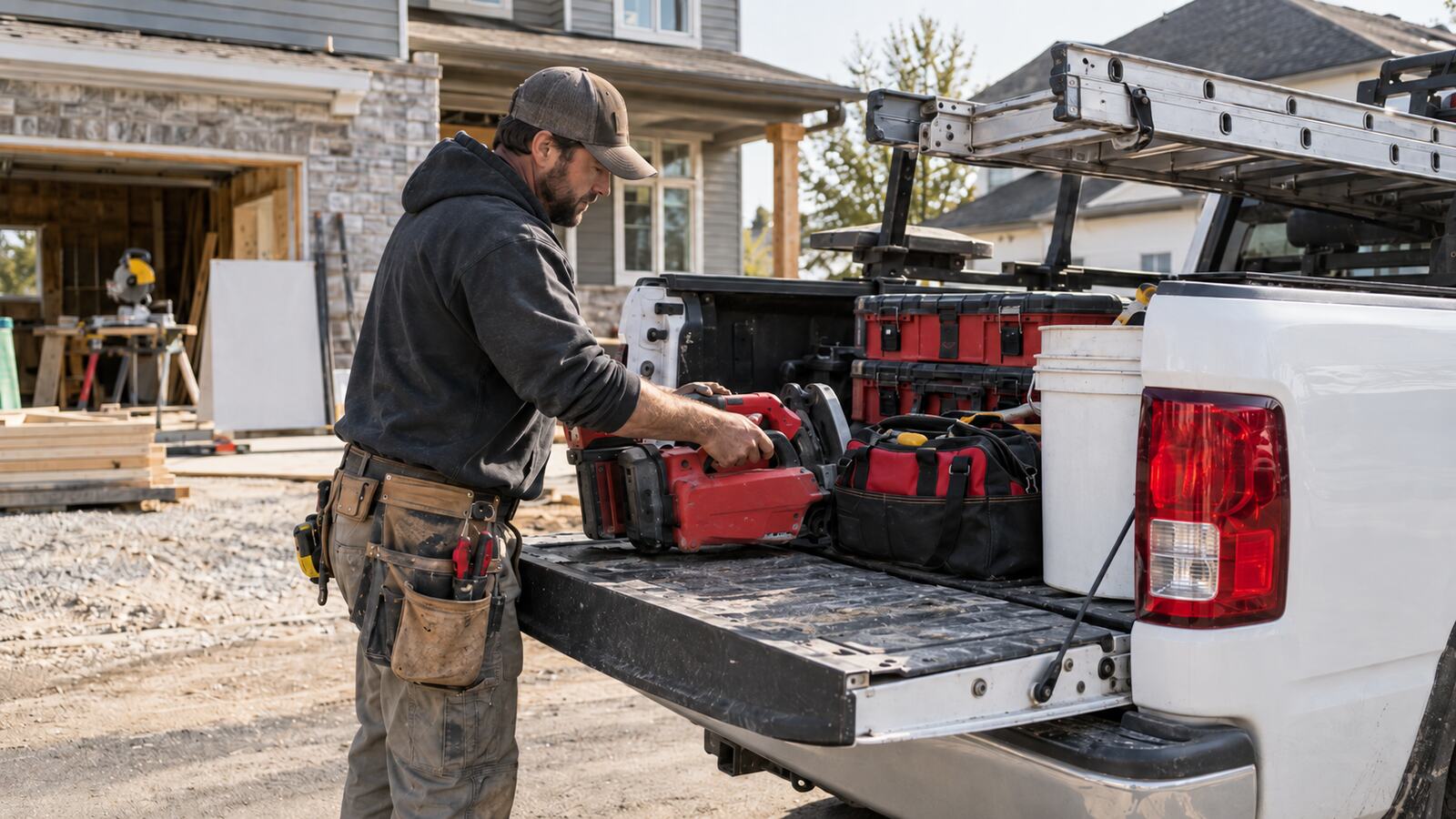
- You need commercial auto insurance when the truck is titled to a business, driven by employees, or used to haul tools, materials or people as the work itself.
- A personal policy excludes business use in most forms, with a narrow exception. The sign on the door is not the test. The use, the title and who drives it are.
- Bring your registration, your driver list and any contract that says what coverage you must carry. We will tell you which policy fits.
You need commercial auto insurance when the truck is titled to a business, driven by employees, or used to haul goods, tools or people as the work itself. Plenty of businesses in South Texas run on a personal policy for years without a problem. Then a claim gets denied. This is how to tell which side of the line you are on.
You almost certainly need commercial coverage if
- The truck is titled in the business name
- Employees drive it
- It hauls tools, equipment, materials or product for the business
- It carries a business name, a DOT number or commercial plates. See when you need a USDOT number.
- You carry goods or people for a fee
- It is a dump truck, box truck, tow truck, flatbed, wrecker or anything bigger than a personal pickup. See box truck insurance in Texas.
A personal policy may still work if
- You are a sole proprietor, meaning the business is you alone, with no partners and no company
- The truck is titled in your own name
- Only you drive it
- Business use means driving to job sites and carrying your own tools
Even then, tell your carrier what you do. Your carrier is the company that issued your policy. Some personal carriers accept light business use. Some exclude it. Finding out at claim time is the expensive way. See the claims that get denied on a personal policy.
What commercial coverage does that personal does not
- Higher liability limits, commonly 500,000 or 1,000,000 dollars, which is what most contracts require. Liability is the coverage that pays for injury and damage you cause to others
- Coverage for employees driving, including hired and non owned vehicles, meaning trucks you rent and cars your employees own
- Coverage for the way the business uses the truck
- The ability to issue a certificate of insurance, the one page proof of coverage a customer asks for
- Filings such as the MCS-90 when you operate under a DOT number
How a commercial policy is written differently
A personal policy covers you, your family and people you let drive, with the car listed on the policy. A commercial policy uses covered auto symbols. These are numbered codes that say which vehicles are covered. The symbol you buy matters more than almost anything else on the page.
- Symbol 1: any auto. The broadest, and the reason many contracts ask for it
- Symbol 7: only the trucks listed on the policy
- Symbol 8: hired autos, meaning vehicles you rent, lease or borrow
- Symbol 9: non owned autos, meaning cars your employees own and use for work
A business with symbol 7 only, and no 8 or 9, has no coverage when an employee runs an errand in their own car. That gap is common and quietly expensive.
Limits are written differently too. Personal policies commonly carry split limits like 100/300/100. Those are three separate caps: injury per person, injury per accident, and property damage. Commercial auto usually carries a combined single limit. That is one number for injury and property damage together, often 500,000 or 1,000,000 dollars. Most contracts and lenders require the higher figure.
The named insured is the person or company the policy is written for. On a commercial policy that is usually the business itself. A truck titled to you but used by the business, or the reverse, creates gaps that only show up during a claim.
The claim that gets denied
A personal auto policy excludes vehicles used in a business in most forms, with a narrow exception. The classic denial in this market is a contractor's crew truck. It is in the contractor's name, driven by an employee, loaded with materials. Every one of those facts pushes it outside the personal policy.
The cost of that denial is the truck, the other car, the injuries and the legal defense. All of it comes out of your own pocket.
What it costs
More than a personal policy, and less than most people expect for one truck with a clean driver. The gap narrows once you count the higher limits you get for the money. This is what drives the price. See what a contractor's policy usually needs, what a food truck needs and when a fleet policy makes sense.
Let us look at your setup
Bring your registration, your driver list and any contract that says what coverage you must carry. We will tell you which policy fits. Use the commercial quote form on this page, or call our McAllen office at (956) 687 3334. Se habla español.
Common follow-up questions
Can I put one truck on a commercial policy and keep my car personal?
Yes, and that is common. The work trucks go on the commercial policy and the family cars stay personal.
Does a magnetic sign on my truck force commercial coverage?
The sign is not the test. The use, the title and who drives it are. The sign is only what makes an adjuster start asking. The adjuster is the person the company sends to look at a claim.
Is a 1099 contractor covered under the company's policy?
Not automatically. Their own truck is their responsibility. The business that hires them usually needs non owned auto coverage, plus a certificate of insurance from each of them.
Which covered auto symbol should my policy have?
Most small businesses are served by broad symbols that cover owned, hired and non owned autos. If a contract requires any auto coverage, that is symbol 1. A truck you own personally but use for the business belongs on whichever policy matches the title. Set that up on purpose, because a mismatch is a leading cause of coverage disputes.

Commercial auto quote. Eight quick questions, then a licensed agent in McAllen calls you with the number.
What do you drive for work?
Pick the closest one. Your agent will sort out the details.
How many trucks?
Count every vehicle the business uses, including one you own personally.
What is the work?
Welder, landscaper, produce hauling, deliveries. A few words is enough.
Does a customer or general contractor need a certificate from you?
Many contracts ask for a one million dollar limit. If you have the requirement in writing, keep it handy for the call.
Do you have a USDOT number?
Needed for crossing state lines in a truck over 10,000 pounds. Not sure is a fine answer.
Who are we quoting?
So your agent knows who they are calling.
Where should we call you?
One call with your quote. No robocalls, no list selling.
Want a copy by email?
Optional. It means you have the numbers in writing after the call.
By pressing “Get my quote” you agree a licensed McAllen Insurance Group agent may contact you by phone, text or email at the details you provide, including by automated dialing. Consent is not required to buy. This is a request for a quote, not an application, and not an offer of coverage.
Getting your request to an agent
We have your request
An agent will call you with the quote. Have your registration and any contract requirements nearby. If you would rather not wait, call us now.
Call (956) 687 3334Monday to Friday, 9 AM to 6 PM. Se habla español.
Read next
Hired and non owned auto coverage: why small businesses need it
Commercial Auto · 2 min read

Gerino Alejos
Licensed insurance agent · License 3128710 · NPN 18243381
Owner of McAllen Insurance Group, an independent agency on North 10th Street in McAllen. Works with clients across Hidalgo, Cameron and Starr counties on Medicare, Marketplace health, life and auto coverage. Se habla español.